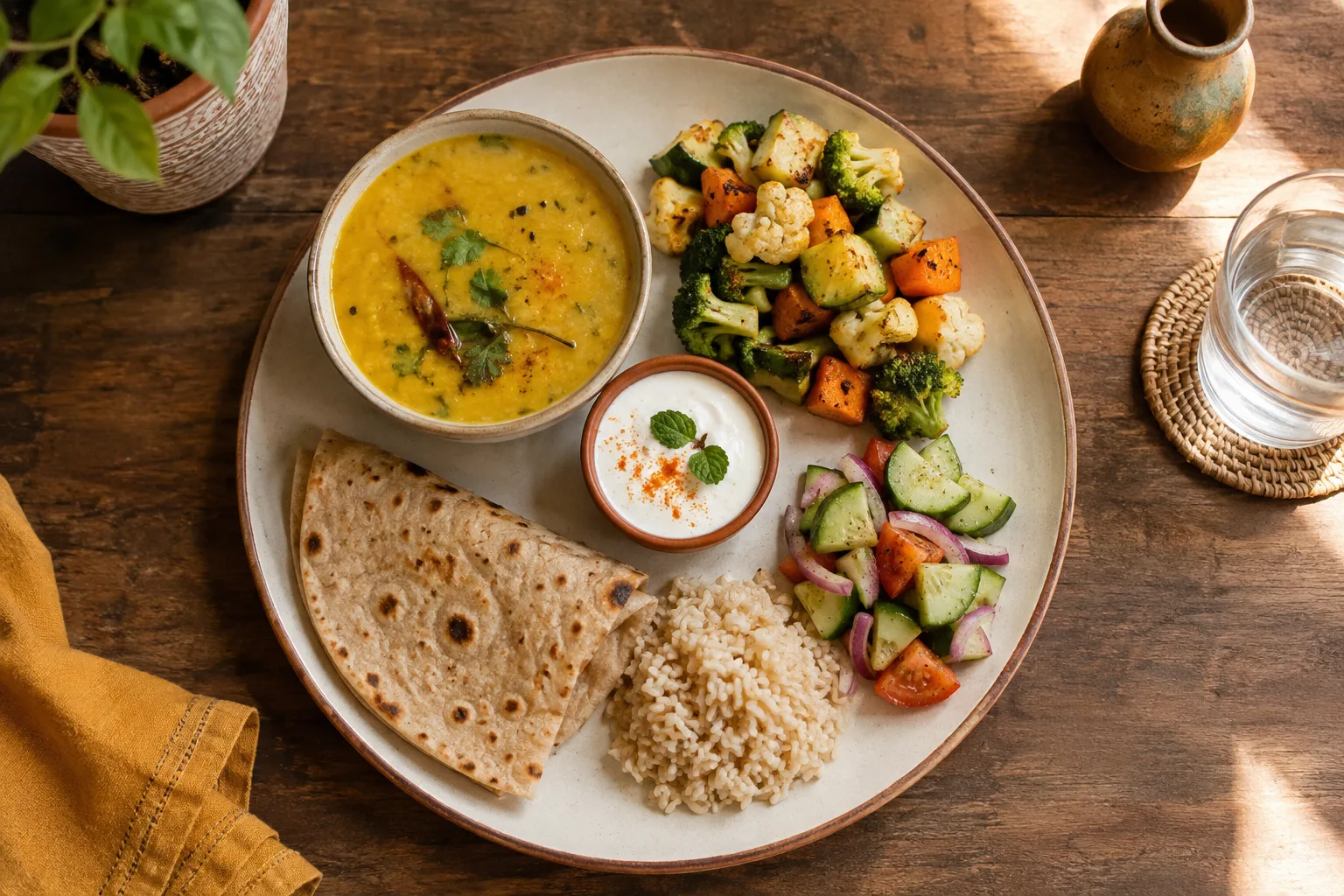
Choose an app for the decisions it improves at 8 pm, not the number of features shown on its homepage.
Look for your food first
If you are vegetarian and eat Indian home food, the database should recognise that from the start. Searching for rajma, poha, idli or thepla should be simpler than rebuilding them from ingredients every time.
It should also understand portions. “One bowl” can be ambiguous; a katori, roti or glass is closer to how people actually serve themselves. That reduces the friction that makes tracking disappear after a few days.
A plan should bend when your day does
A rigid menu is fragile. Meetings run late, someone brings sweets home, and a family dinner is part of life. A useful diet app shows what is left today and offers a lighter next meal or a simple swap when one meal runs larger than planned.
That flexibility is not an excuse to ignore the target. It is a way of staying engaged after an imperfect meal instead of deciding that the whole day is lost.
Keep the rest of the app calm
Water, steps and weight are useful when they are one tap away. They do not need to become an exhausting dashboard of badges. The best design shows the next action and gets out of the way.
Plated combines these basics with a vegetarian Indian food database, meal planning and photo estimates. The account is free, so you can see whether the routine fits before making it a habit.
Make the next meal easier.
Build a free plan around Indian vegetarian meals, then track what you actually eat.
Build my free plan →For general nutrition and physical-activity guidance, see the ICMR–National Institute of Nutrition Dietary Guidelines for Indians, the World Health Organization’s healthy diet guidance, and the WHO physical activity guidance. This journal is general information, not personal medical advice.