You do not need to weigh every meal forever. A few honest portion references make everyday decisions clearer.
Why Indian portions need their own language
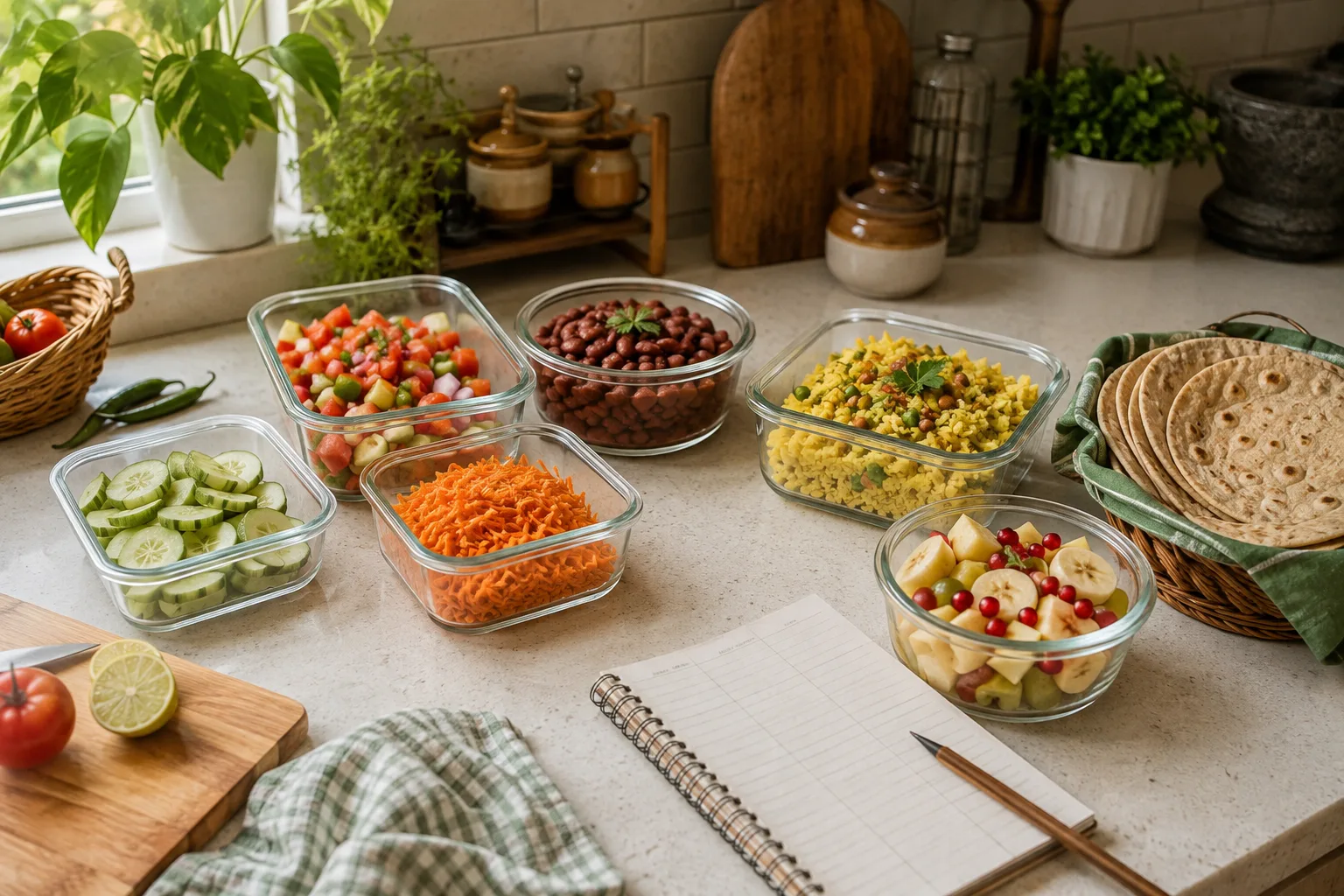
“One serving” means very little if the app does not say whether it is a small bowl, a restaurant bowl or a large family ladle. Indian home food is naturally shareable and variable, so practical units matter: rotis, katoris, glasses, tablespoons and pieces.
Using familiar units also makes it easier to spot the meaningful differences. A dal can be a nourishing, filling part of dinner; the total changes mostly with the amount of tadka, ghee and the bowl size. A good log gives you room to reflect that.
What is worth estimating
Focus on the parts of a meal that vary most: grains, cooking fat, dairy, fried sides, sugar in drinks and second helpings. Vegetables, dal and curd still count, but they often make a plate more satisfying for the calories they bring.
Estimates will never be laboratory measurements. They are a consistent compass. Log the same kind of bowl the same way most of the time, then use your weekly trend and hunger levels to decide whether your plan needs adjusting.
Build a balanced plate, not a tiny plate
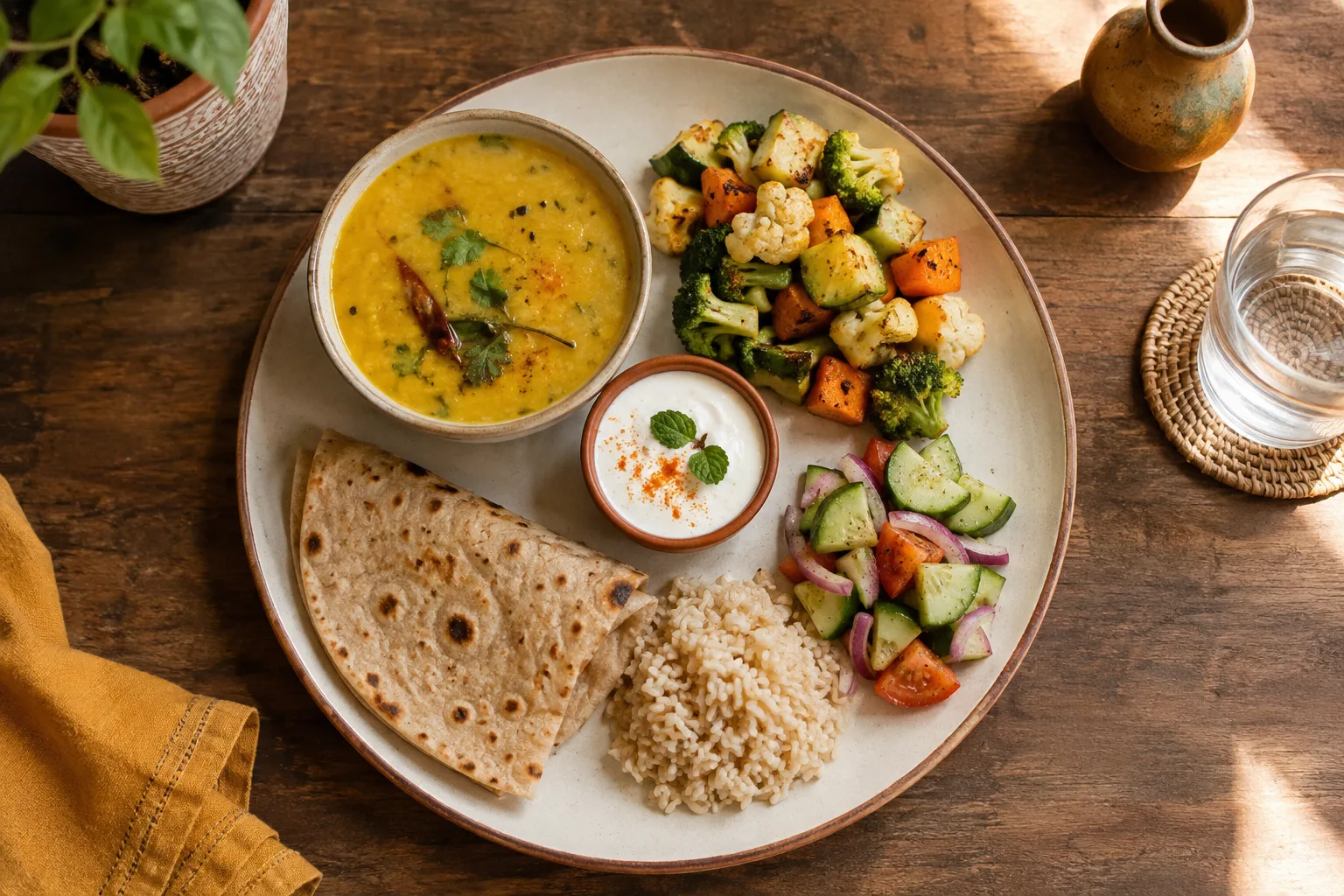
A practical vegetarian plate usually has a pulse or dairy-based protein source, plenty of vegetables, a measured grain portion and something cooling or fresh. This is close to the Indian Council of Medical Research–National Institute of Nutrition emphasis on varied foods, vegetables, whole grains, pulses and modest added fats.
Plated lets you search dishes and record portions in the language of your kitchen. That means the daily calorie target stays connected to real meals instead of becoming a number you avoid looking at.
Make the next meal easier.
Build a free plan around Indian vegetarian meals, then track what you actually eat.
Build my free plan →For general nutrition and physical-activity guidance, see the ICMR–National Institute of Nutrition Dietary Guidelines for Indians, the World Health Organization’s healthy diet guidance, and the WHO physical activity guidance. This journal is general information, not personal medical advice.