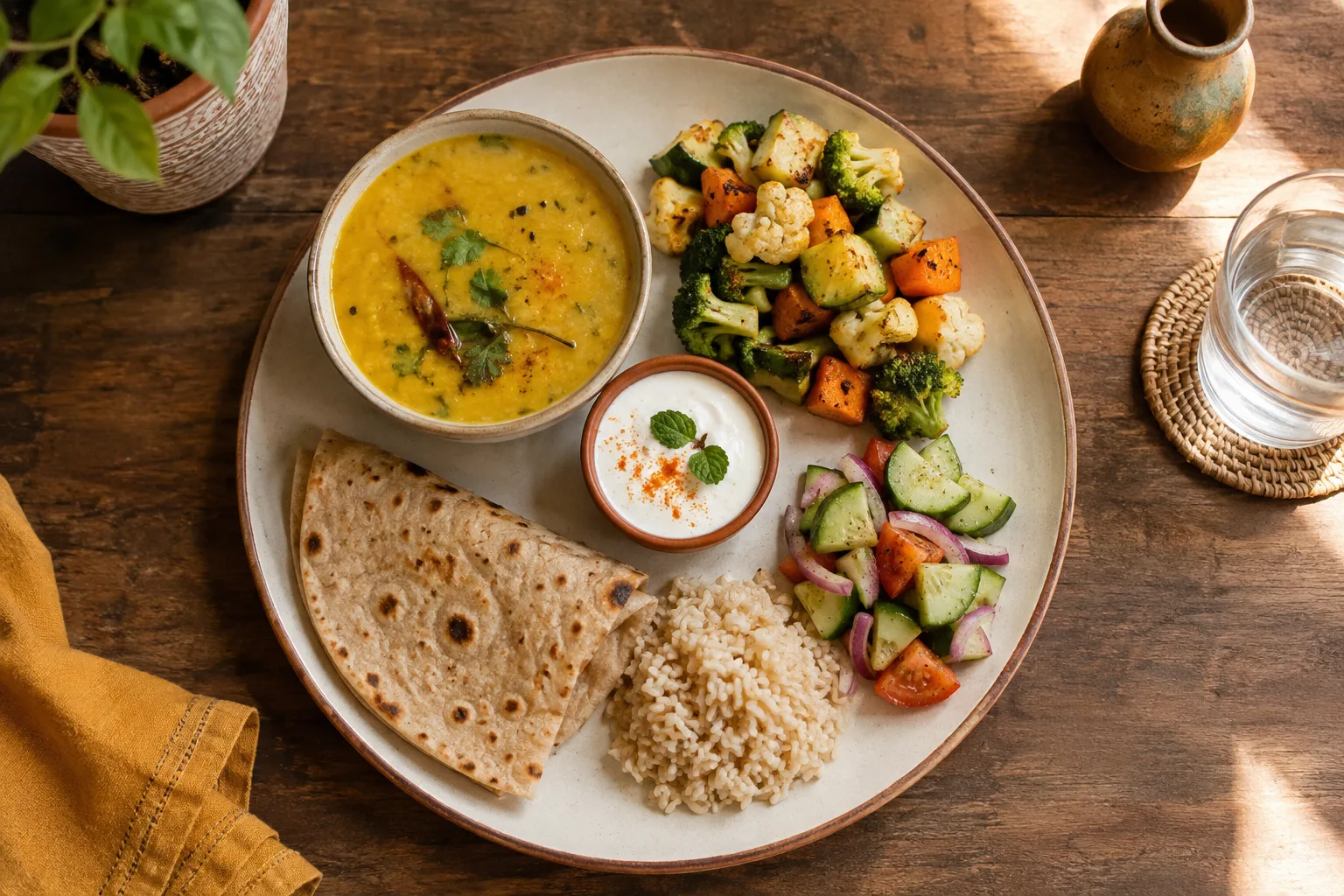
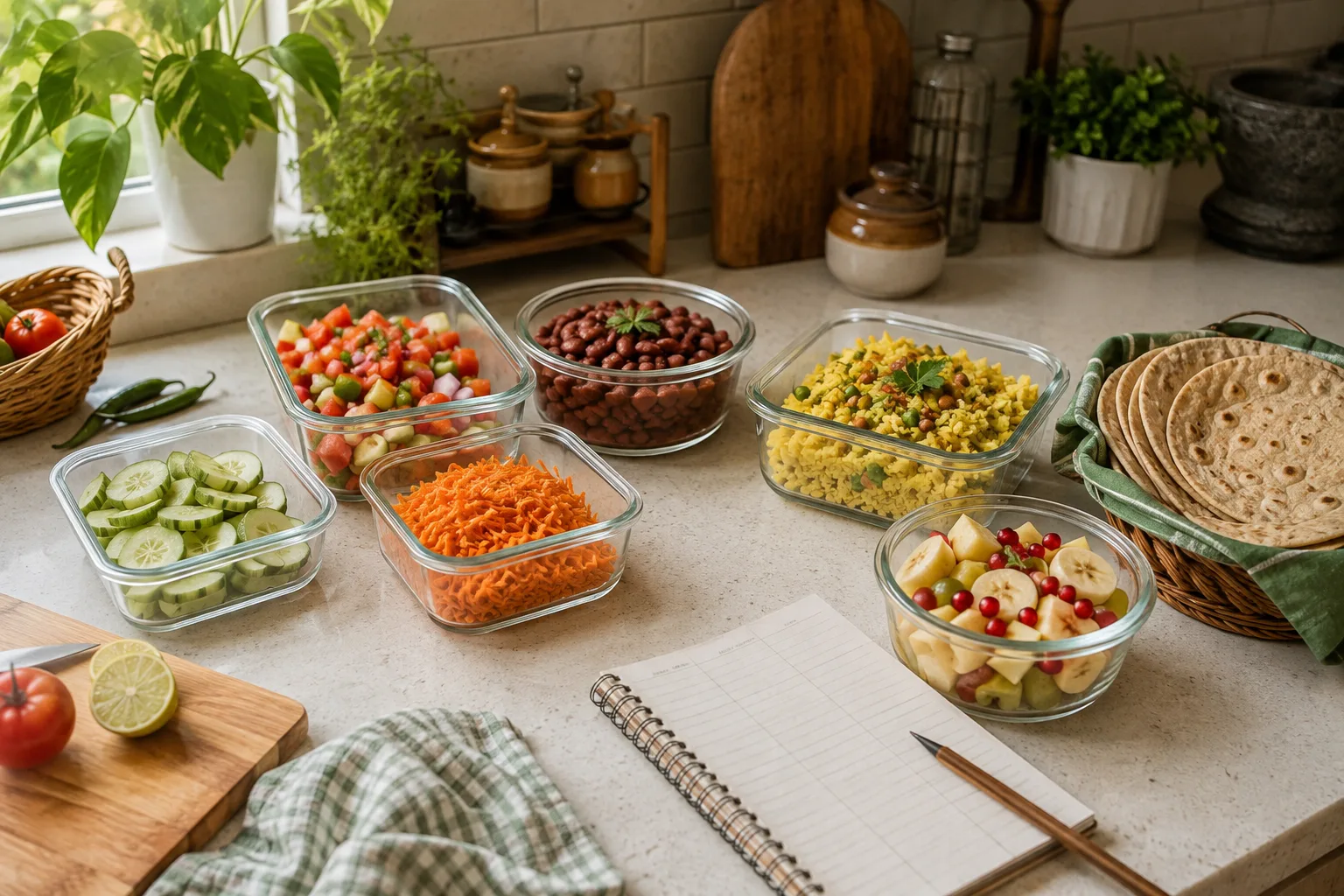
Portion estimates become useful when you use the same bowl, roti size and recipe assumptions consistently.
Why exact numbers vary
A roti can be small or restaurant-sized, thin or brushed with ghee. Rice may be steamed or fried. Dal can be lightly seasoned or finished with a generous tadka. The calorie number depends on the recipe and portion, not the dish name alone.
That does not make tracking pointless. It means you should choose a consistent reference: your usual medium roti, your usual katori, your usual cooked rice serving. The comparison becomes more useful over time.
Think in plate combinations
Dal often adds protein and fibre; rice or roti provides carbohydrate; vegetables add volume and variety. The plate becomes more filling when those components appear together instead of relying on a large serving of only one.
If you enjoy rice, you can measure a portion and add dal, vegetables and curd. If you prefer rotis, you can do the same. The practical choice is the one you can repeat without feeling deprived.
Log the extras too
Cooking oil, ghee, papad, pickle, desserts and sweet drinks may matter more to a meal total than choosing rice over roti. Include them honestly, then decide what is worth changing for you.
Plated lists calorie estimates with practical serving descriptions. Use them as a guide to the plate you actually ate, not as a reason to make every dinner identical.
Make the next meal easier.
Build a free plan around Indian vegetarian meals, then track what you actually eat.
Build my free plan →For general nutrition and physical-activity guidance, see the ICMR–National Institute of Nutrition Dietary Guidelines for Indians, the World Health Organization’s healthy diet guidance, and the WHO physical activity guidance. This journal is general information, not personal medical advice.