Pick familiar protein sources you enjoy and repeat them across the week; consistency beats a complicated menu.
Start with the foods already in your kitchen
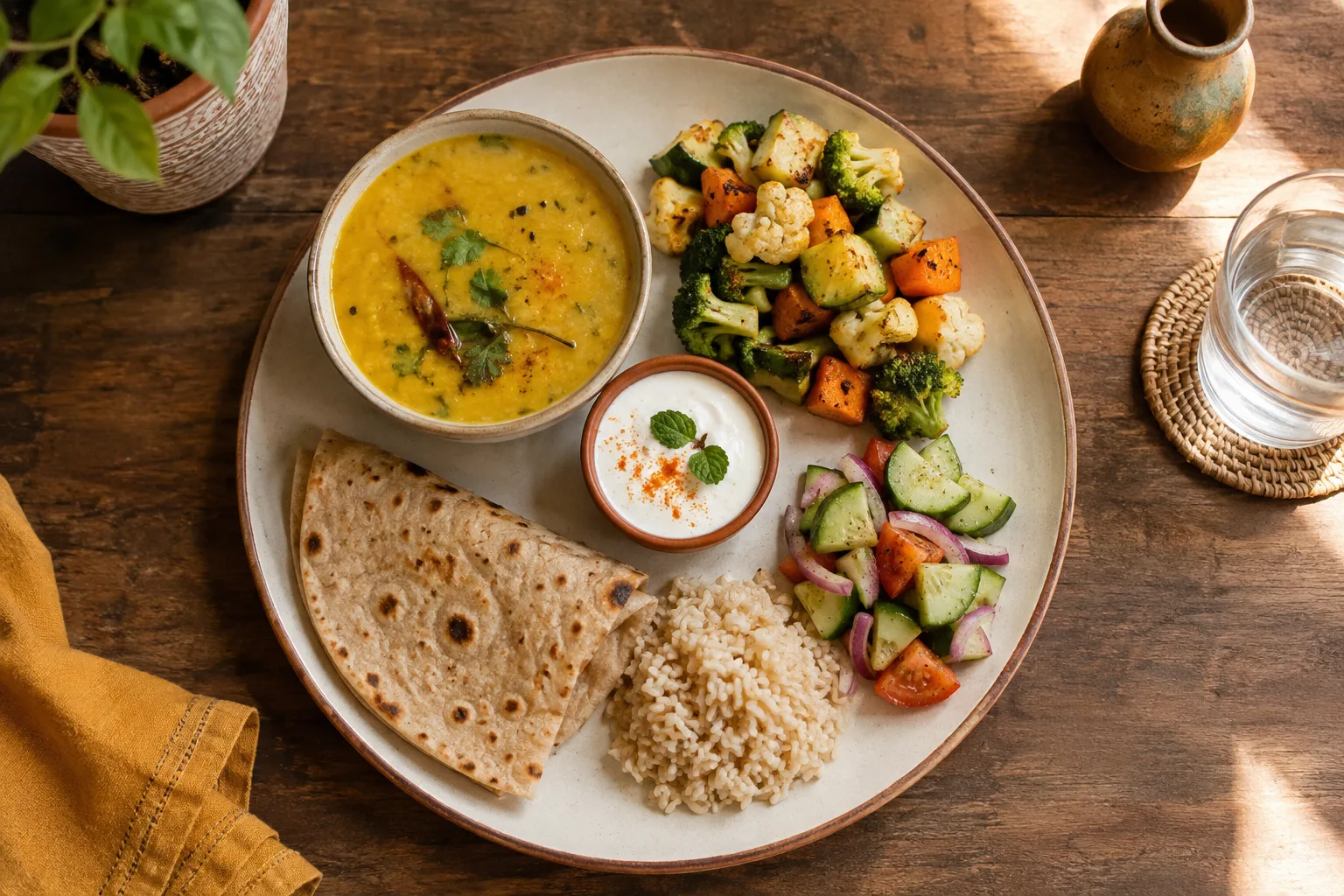
Dals, rajma, chana, lobia, sprouts, paneer, tofu, curd, milk, soy and peanuts can all contribute protein. Pairing pulses with grains is also a familiar way to create a nourishing meal.
You do not need every meal to look like a fitness recipe. A bowl of chana chaat, moong chilla with curd, dal with sabzi, or paneer mixed into vegetables can be a practical place to start.
Spread it through the day
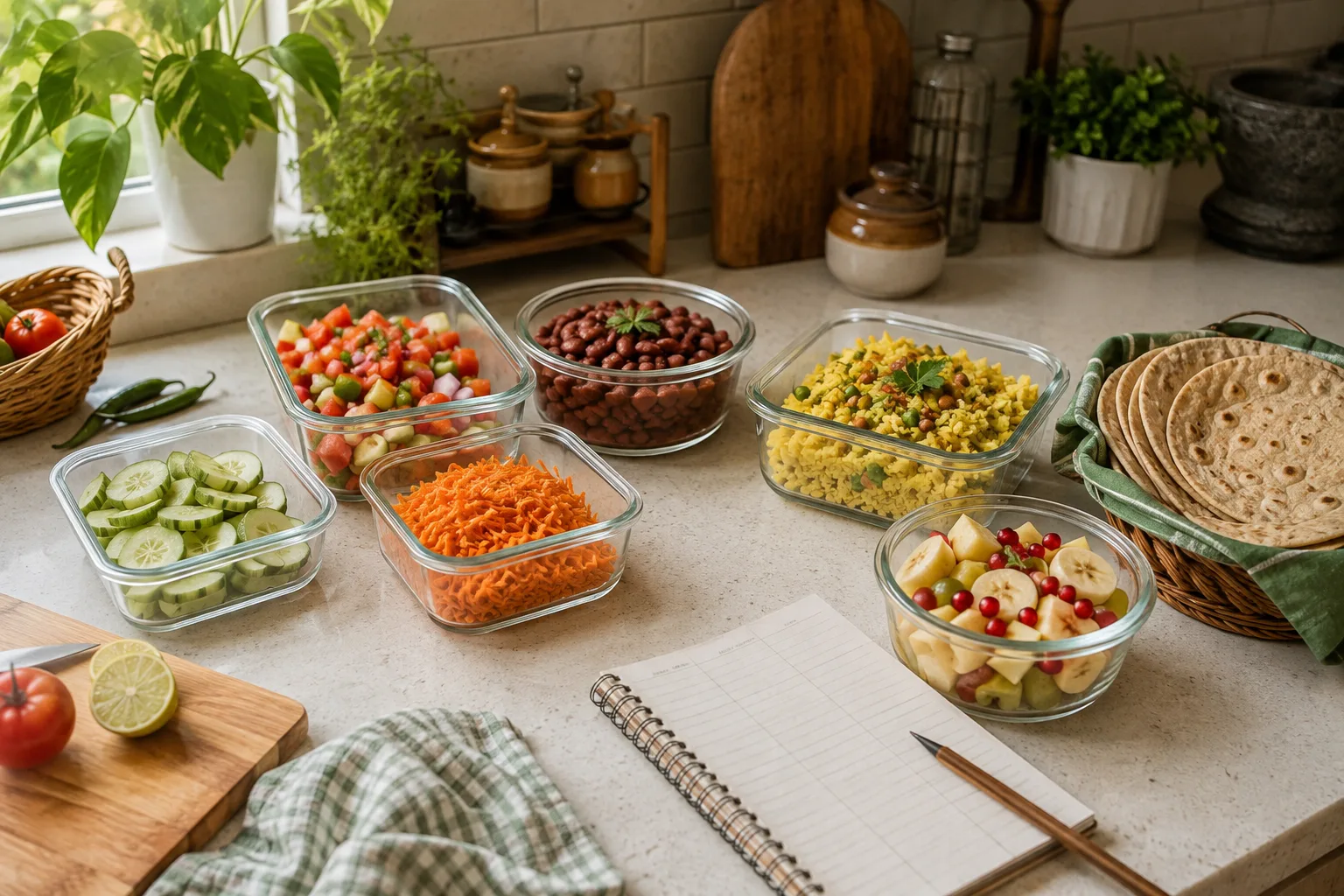
Many people find it easier to include a source of protein at breakfast and lunch, rather than trying to make dinner do all the work. Think curd beside poha, besan chilla, leftover dal with a roti, or a simple bean salad.
The right amount depends on your body, appetite, health and activity. If you have kidney disease or a condition that affects protein intake, ask a qualified clinician for individual advice.
Use protein to support the plan
When a meal has protein, vegetables and a satisfying portion of grain, it can be easier to stay with your calorie target without feeling as though you are constantly negotiating hunger.
Plated shows protein alongside calories for the dishes you log. Treat it as a helpful signal, not a score to chase at the expense of eating a varied diet.
Make the next meal easier.
Build a free plan around Indian vegetarian meals, then track what you actually eat.
Build my free plan →For general nutrition and physical-activity guidance, see the ICMR–National Institute of Nutrition Dietary Guidelines for Indians, the World Health Organization’s healthy diet guidance, and the WHO physical activity guidance. This journal is general information, not personal medical advice.