Use photo estimates to reduce logging friction, then correct the items and portions that you know better than the camera does.
What a photo estimate can do well
A clear overhead photo can help identify common dishes and make a sensible starting estimate for a plate. It is especially useful when you are in a hurry, eating at someone else’s home or cannot remember every item after a meal.
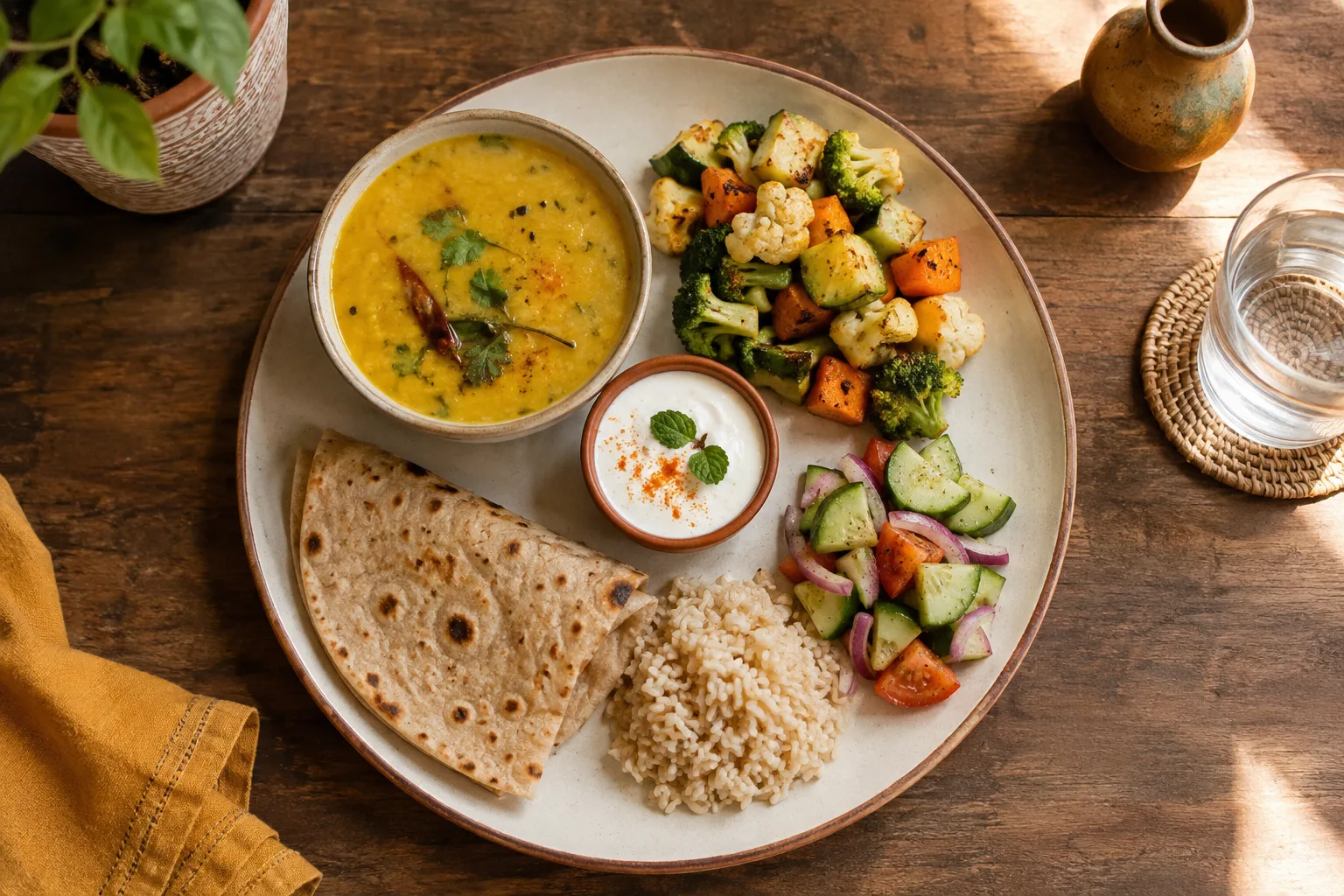
For Indian food, the helpful result is an editable list: poha, idli, dal, roti, chutney or curd—plus an estimate you can review. It turns “I have no idea where to begin” into a quick check.
Where photos need your judgement
A camera cannot reliably know how much oil went into a tadka, whether a drink is sweet lassi or chaas, or how thick the ghee layer is on a roti. Stacked food and hidden ingredients are difficult too.
That is why Plated asks you to review the recognised items, change quantities and untick anything that is wrong before logging. A photo is a shortcut to a draft, not permission to stop paying attention.
How to get a more useful result
Take the photo from above with the full plate in view. Natural light helps. Keep a spoon or another familiar object in frame when possible, and photograph before you begin eating.
Then use the estimate as you would any food log: consistently, not perfectly. Over time, the benefit is not one exact number—it is a clearer picture of the meals and portions that shape your week.
Make the next meal easier.
Build a free plan around Indian vegetarian meals, then track what you actually eat.
Build my free plan →For general nutrition and physical-activity guidance, see the ICMR–National Institute of Nutrition Dietary Guidelines for Indians, the World Health Organization’s healthy diet guidance, and the WHO physical activity guidance. This journal is general information, not personal medical advice.