Plan a few reliable anchors—breakfast, a protein source and an easy snack—then let dinner stay flexible.
Plan anchors, not every bite
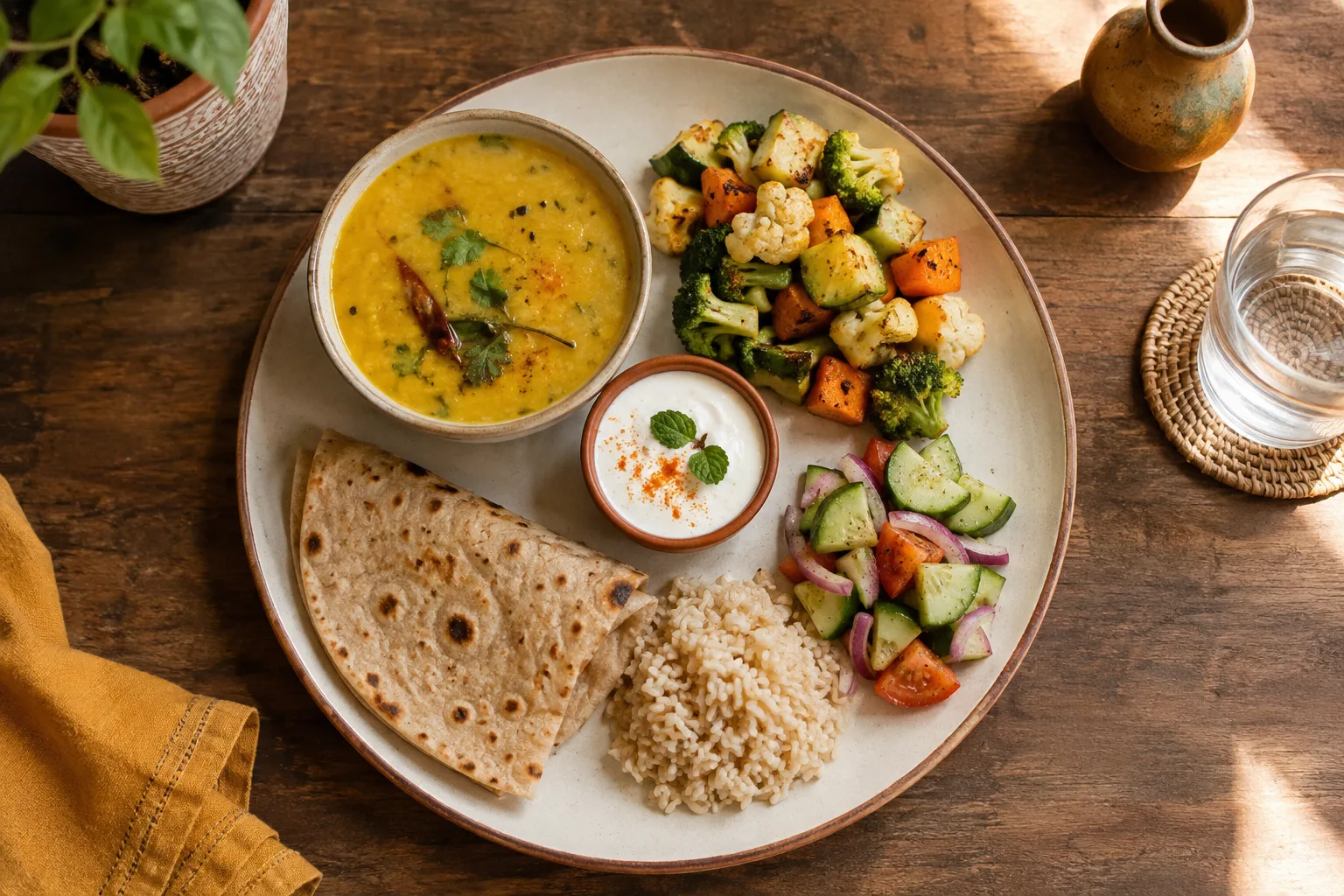
A weekly plan becomes easier when you choose a handful of dependable meals rather than writing seven flawless menus. Think poha with curd, besan chilla, rajma with a measured rice portion, moong dal, vegetable khichdi, paneer or tofu dishes.
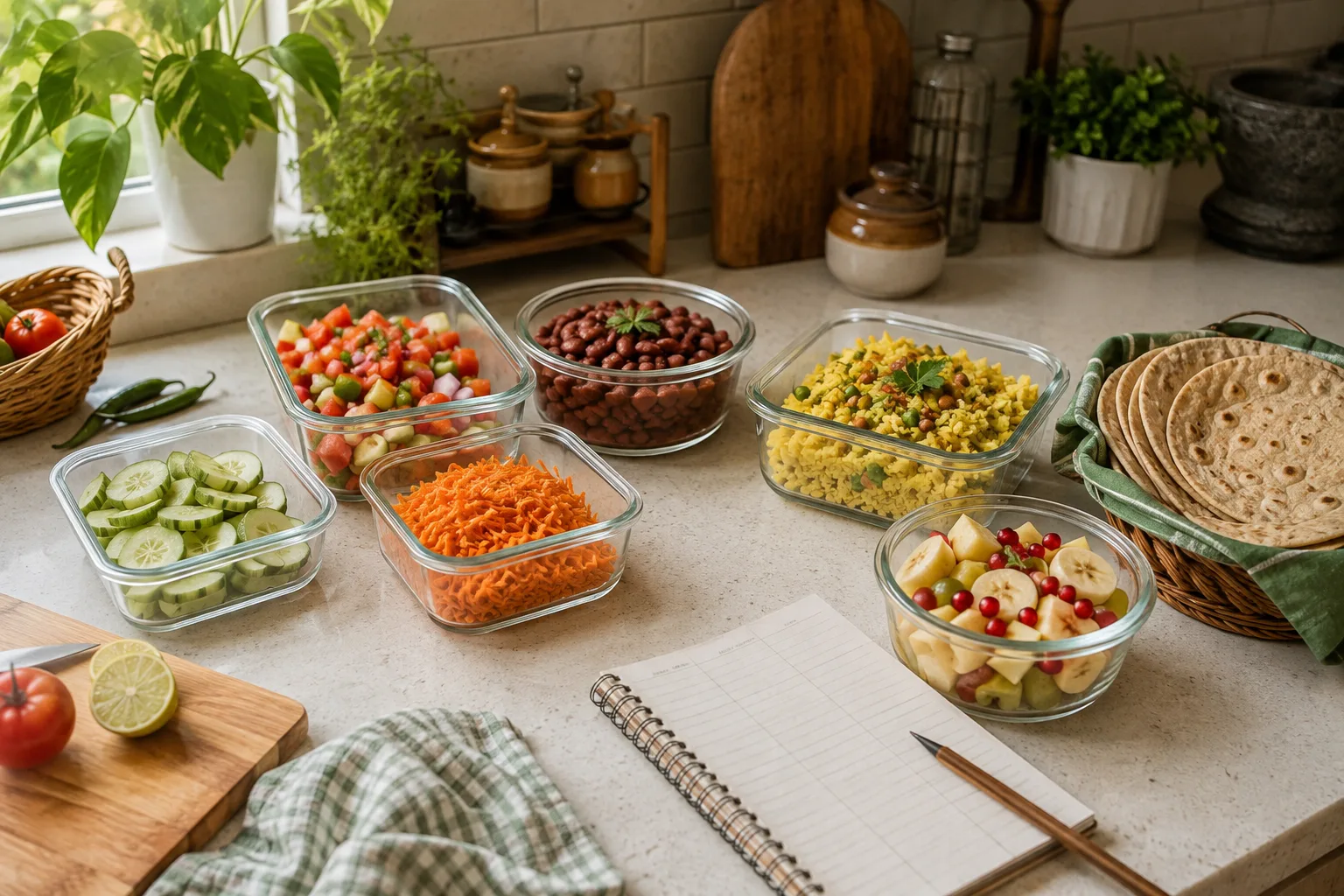
Choose meals that share ingredients. Chopped cucumber can become salad, raita and a quick snack. A pot of cooked beans can become lunch one day and a chaat-style bowl the next.
Make protein easy to find
Vegetarian meals can be satisfying when there is a clear protein source: dals, beans, chana, sprouts, paneer, tofu, curd, milk, soy or a combination of pulses and grains. The goal is not to chase a trend; it is to make meals stay with you longer.
Put the protein decision on the plan first. Then add vegetables, a grain portion and flavour. This simple order makes the plan easier to adapt when a lunch meeting or family dinner changes the day.
Keep one flexible meal
Leave one meal each week deliberately open. It may become leftovers, eating out or a family favourite. You can log it, see what remains, and choose the next meal accordingly.
Plated builds a day around your target and lets you swap meals. Planning becomes a helpful default rather than a rule you have “failed” the moment life changes.
Make the next meal easier.
Build a free plan around Indian vegetarian meals, then track what you actually eat.
Build my free plan →For general nutrition and physical-activity guidance, see the ICMR–National Institute of Nutrition Dietary Guidelines for Indians, the World Health Organization’s healthy diet guidance, and the WHO physical activity guidance. This journal is general information, not personal medical advice.